House Robber
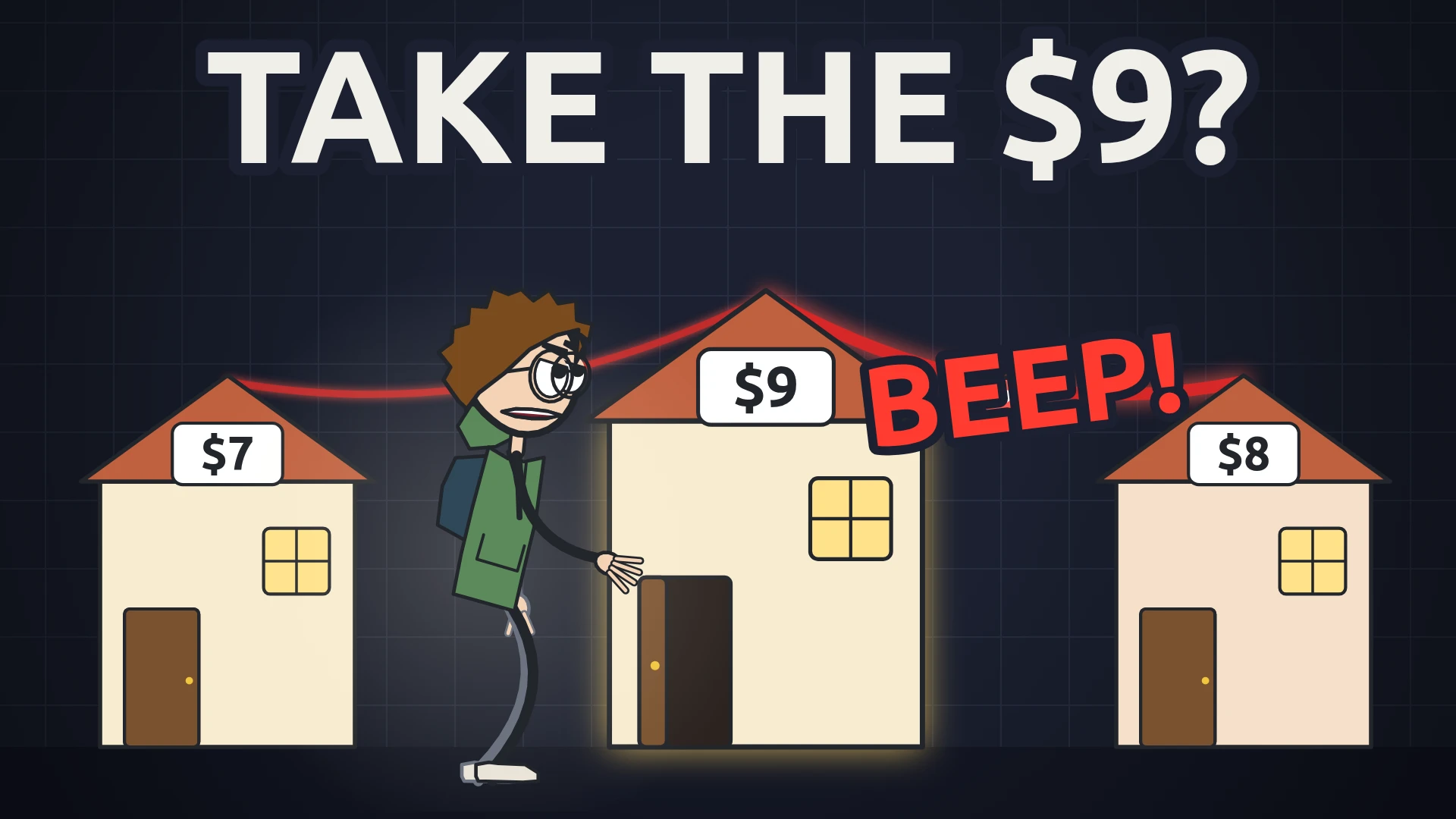
Five houses, one rule: no two neighbors. Grabbing the biggest house first gets $12; the best plan gets $15. Build dp[i] from nothing, then shrink it to two variables.
Stop memorizing algorithms.
Start visualizing them.
You know how to code. Now learn how to think. Every guide starts with a problem, lets the obvious solution fail, and builds the pattern in pictures before a single line of Python.
On YouTube as @AppliedCodingHQ

Guides
Each guide is a video and a written walkthrough of the same idea: the problem, the failure, the observation, the code.
Five houses, one rule: no two neighbors. Grabbing the biggest house first gets $12; the best plan gets $15. Build dp[i] from nothing, then shrink it to two variables.
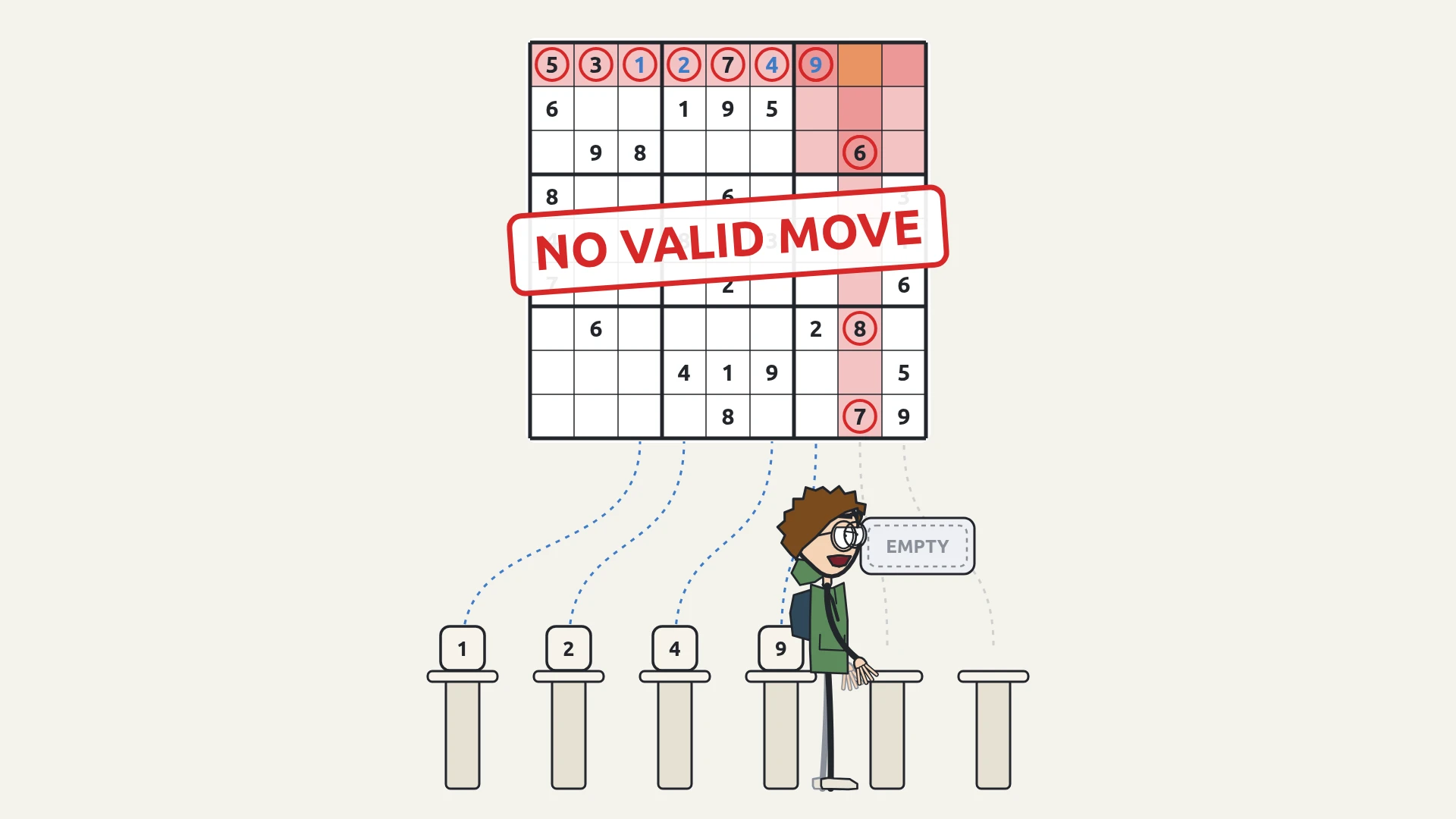
Fill the first empty cell with the first digit that fits and keep going. When a cell has nothing left, walk back to the last choice that can still change. The whole technique in one row of a puzzle — then the code, and its real run: 4,208 placements.
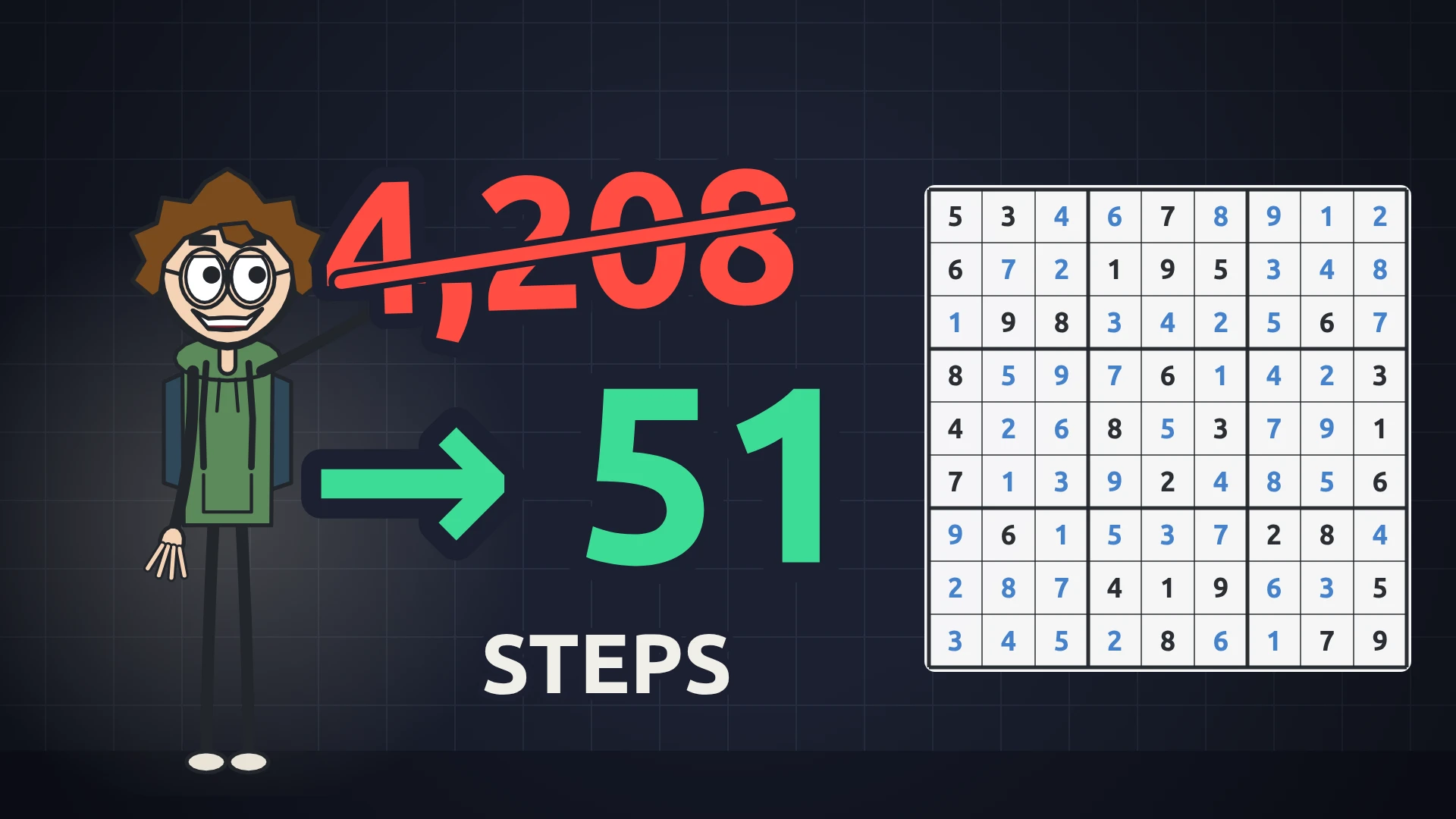
Same backtracking, one better decision: fill the square with the fewest options first, and remember what every row, column and box already uses. 4,208 placements become 51 — not one wrong guess.
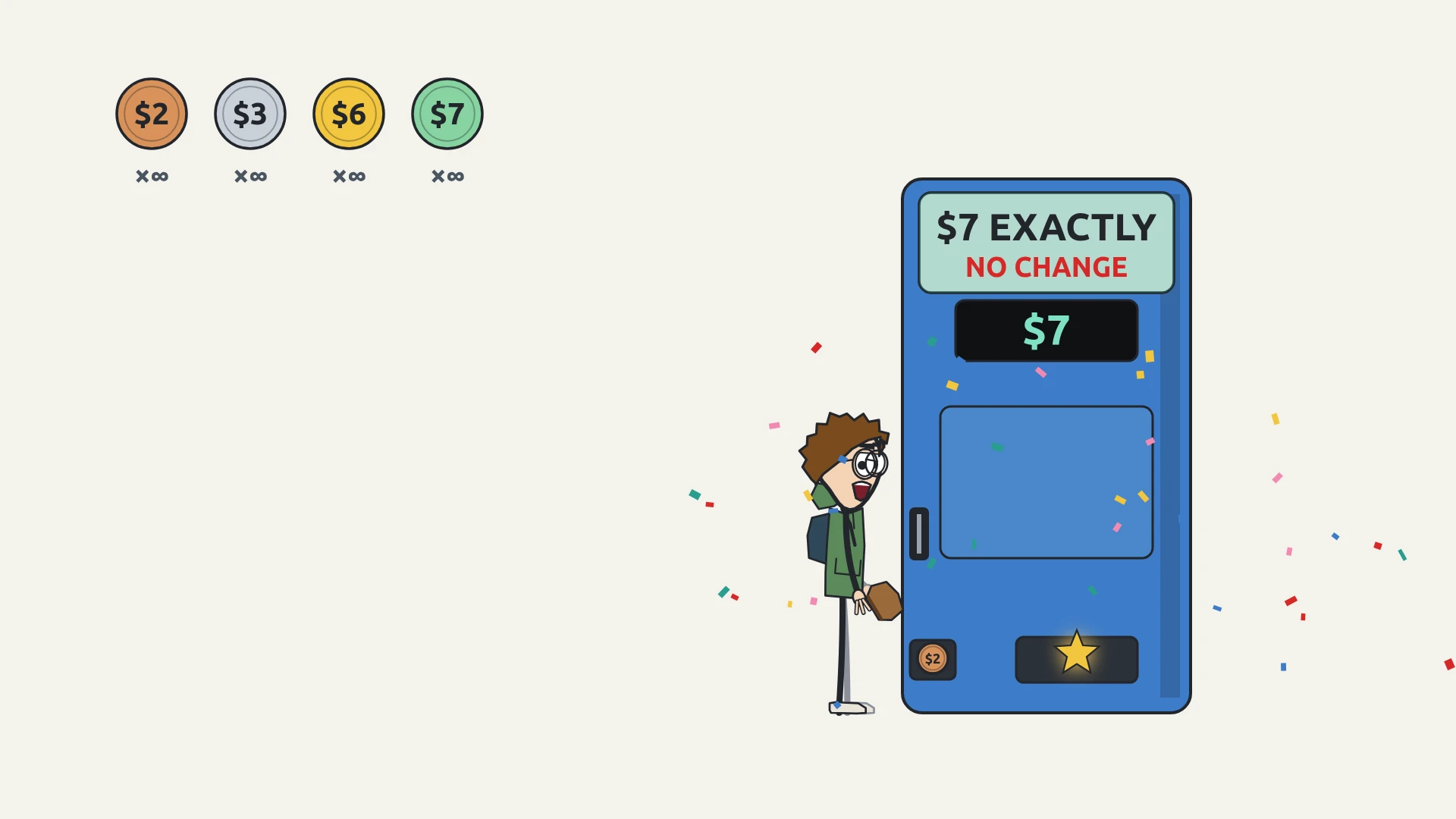
A machine wants exactly $7, and you have all the $2, $3, $6 and $7 coins you like. Choose, explore, undo — plus the one rule that keeps the same answer from showing up twice.
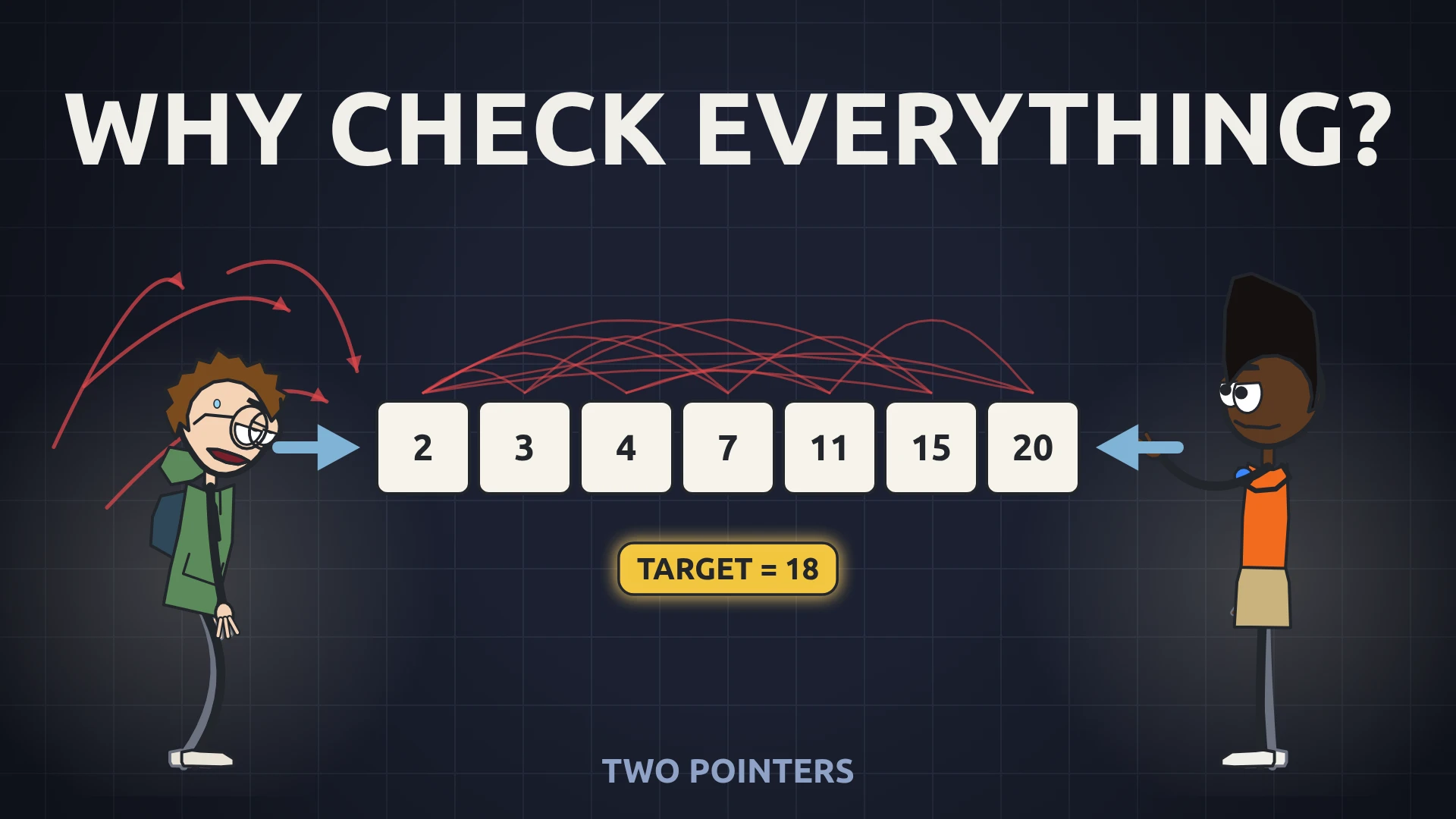
Seven sorted price tags and $18 to spend. Brute force checks pair after pair; two pointers walking in from both ends find the answer in three moves — and each move rules out a whole row of pairs.
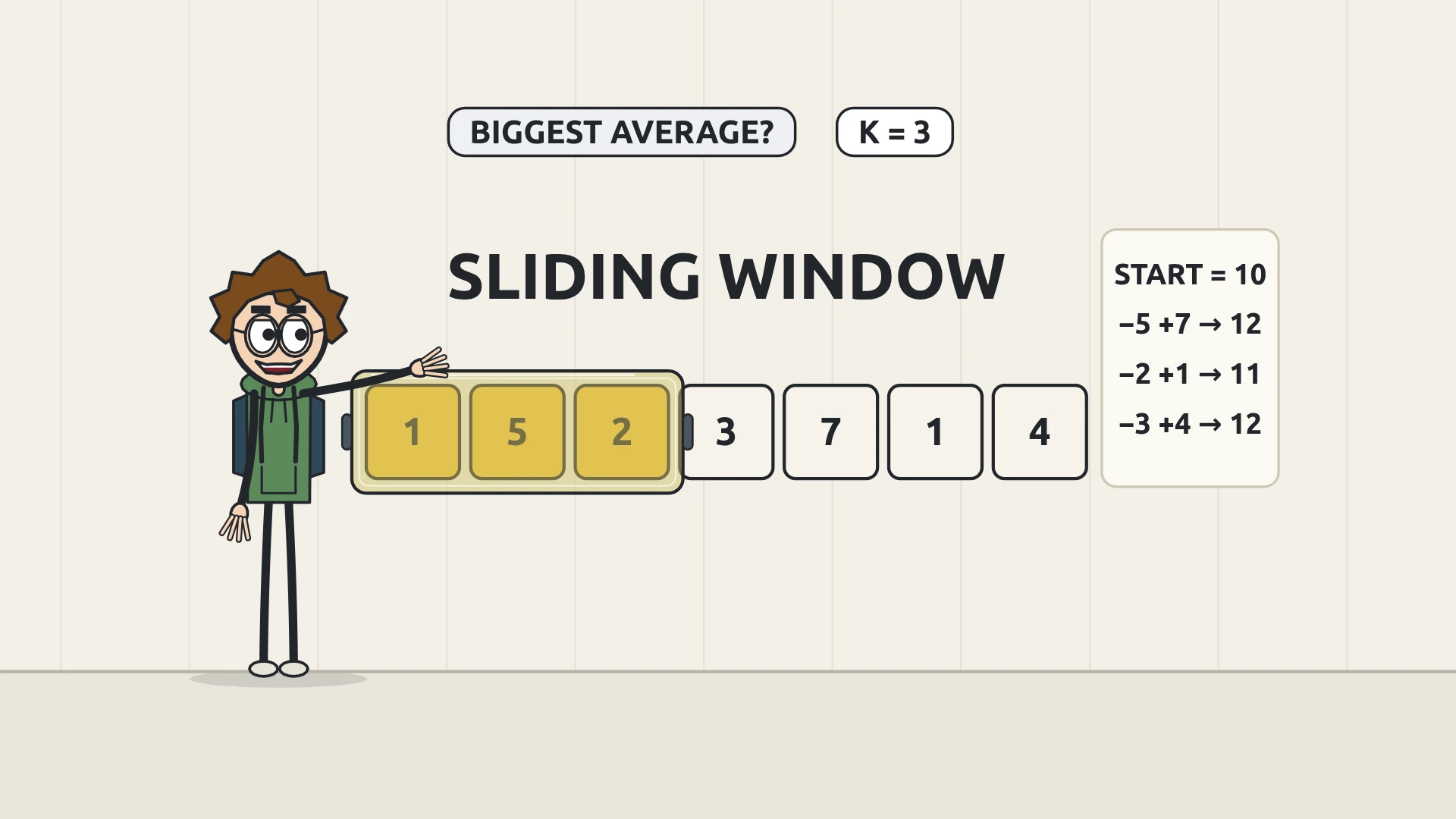
The biggest average of three numbers next to each other. Adding up every range again repeats the same numbers; a window that slides — one leaves, one comes in — does the whole row in one pass. Plus the off-by-one that quietly gives the wrong answer.
How it works
Nothing here opens with a definition. Every guide follows the same four beats.
No “today we learn binary search”. You meet the situation that makes the technique worth inventing.
We try the obvious solution and watch exactly where it breaks, so the cost is something you can see.
What are we repeating? What can we skip? The pattern is built in pictures first and named afterwards.
Python that follows the pictures line by line, time and space explained, and problems to solve on your own.
Patterns
The hard part of a new problem is recognizing what it is. These are the patterns the guides cover, with the question to ask yourself for each.
Am I looking at the same elements twice?
Can I choose, explore, and undo?
Do the same subproblems keep coming back?
Have I seen this before?
Am I recalculating the same range?
Am I adding the same numbers again?
Is something waiting for its future?
Can I cut the search space in half?
What if two pointers move at different speeds?
Do I go deep first, or level by level?
Do I keep asking for the smallest one?
Are these things connected to each other?
Do I really need to look ahead?
The checklist
This is where every guide is heading: not fifty memorized algorithms, but a way to start thinking.
About
Applied Coding is for recent graduates and junior developers getting ready for coding interviews. You have met arrays, hash maps, recursion and dynamic programming. What nobody taught is how to look at an unfamiliar problem and tell which of them it is asking for.
That gap between knowing a technique and recognizing when to use it is the only thing this site works on. The guides are short animated stories with one narrator, real interview-style problems, and code you can run.
“I know the algorithms, but I don’t know which one to use.”
“Give me a problem I’ve never seen, and I know how to start thinking.”
New guides go up on YouTube, and the written version with the full code lands here.